
Quick Answer
Green on a driveway is usually algae or moss, and black is usually mold, mildew or dirt mixed with organic growth. Concrete is porous, so it soaks up moisture and gives growth a place to take hold, especially in shade and in spots that stay damp. Around Lake Norman, humidity, mature trees and heavy spring pollen make it happen faster.
Why Concrete Changes Color
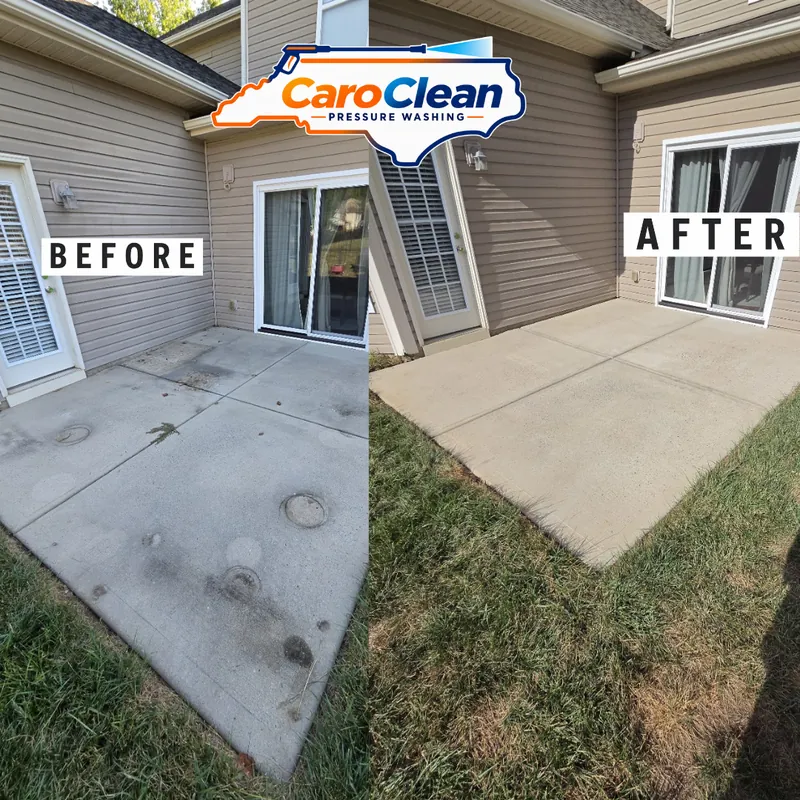
Concrete looks solid, but it's full of tiny pores. After rain or morning dew, those pores hold water. Pollen, leaves, pine straw and dirt settle on top, and organic growth moves in and feeds on all of it. Over time a light gray driveway turns dark, blotchy or green.
Broom finished concrete, the kind with fine lines across the surface that most driveways have, gives dirt and growth even more places to settle. That texture is great for traction, but it's also why concrete can look dark even after a rain shower.
What Each Color Usually Means
Green
Algae and moss. Look for it in shady areas, low spots, along the edges next to the lawn and anywhere a downspout empties onto the concrete.
Black
Usually mold and mildew, especially under trees and in spots that stay damp. Dirt ground in by tires and foot traffic adds to it. Small black dots that feel hard and crusty can be lichen, which grips concrete tightly.
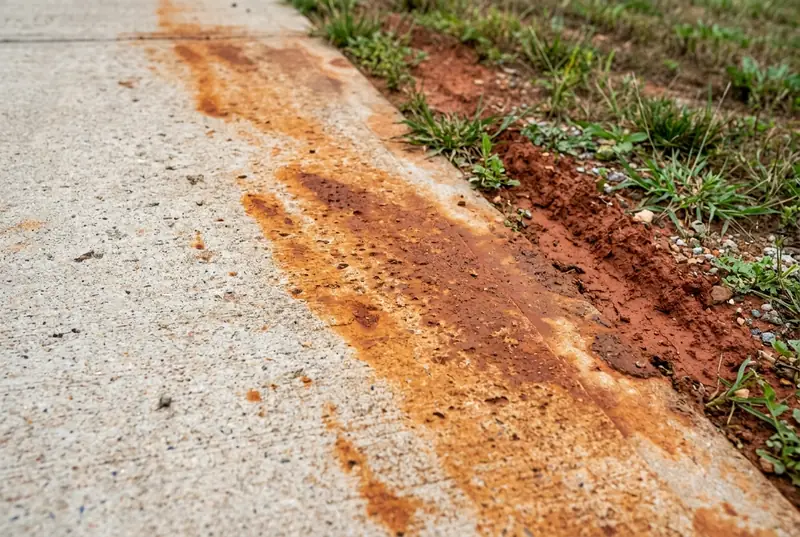
Orange or Red
Red clay, tracked in from landscaping and new construction or washed onto the driveway from the yard. It's one of the most common stains on newer driveways around Lake Norman, and it takes its own removal process, different from a regular cleaning. More in How Do You Get Red Clay Stains Off a Driveway?
Brown
Stains left behind by wet leaves and pine straw that sat on the concrete for a while.
Why New Driveways Turn Dark So Fast
It surprises a lot of people when a driveway that's only a year or two old already looks dirty. New neighborhoods are hard on concrete. Construction dust and mud get tracked on daily, fresh landscaping washes red clay and mulch onto the edges, and brand new irrigation systems often spray right onto the driveway. All of that gives growth a head start.
Newer neighborhoods around Huntersville and Mooresville see this all the time.
The Spots That Turn First
- Under trees, where shade keeps the concrete damp
- Where downspouts empty onto the driveway or walkway
- Where sprinklers hit the concrete every day
- Along the edges of the lawn and garden beds
- Driveways and patios close to the lake
Is It a Problem?
Besides making the whole house look older, algae and mildew make concrete slippery when it's wet, which matters on walkways, steps and pool decks. A dark, stained driveway is also one of the things HOAs flag most often. More on that in Can My HOA Fine Me for a Dirty House or Driveway?
Why a Quick Pressure Wash Doesn't Last
Cleaning flat concrete with a handheld wand is how most driveways end up with stripes, called wand marks. And blasting the surface leaves growth behind in the pores, so the dark color creeps back quickly.
How We Clean a Driveway
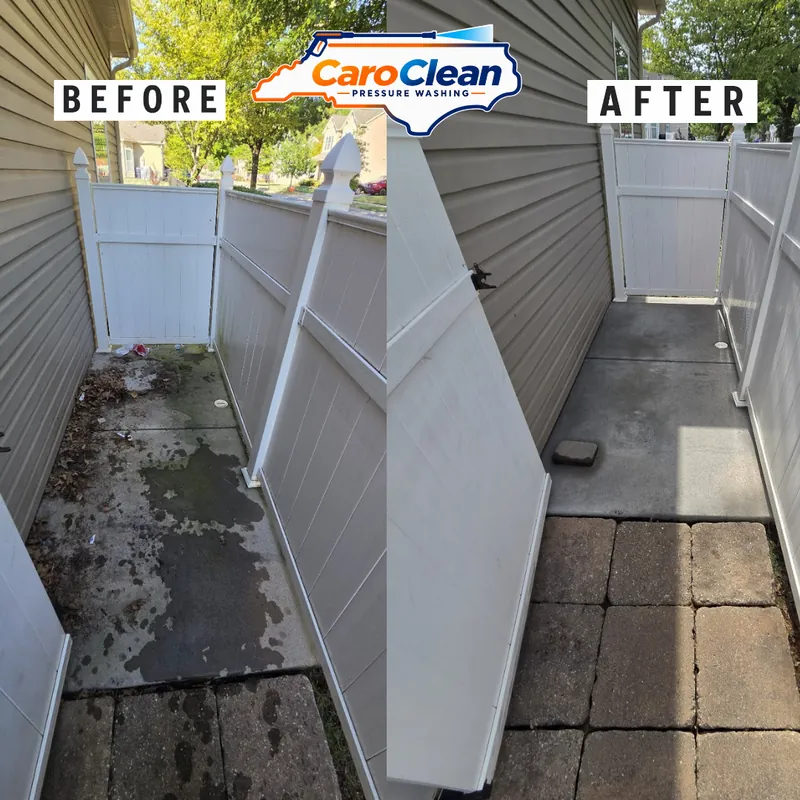
We spray out all the joints to clear weeds and debris, then surface clean the top for one even finish with no stripes. Last comes a post treatment that soaks into the concrete. It brightens the concrete and helps it stay clean longer before mold, mildew and other growth come back.
All of your concrete, from the driveway to walkways and patios, can be cleaned in the same visit for one flat price.
It's Not Just the Driveway
The same growth and staining show up on every piece of concrete around your home:
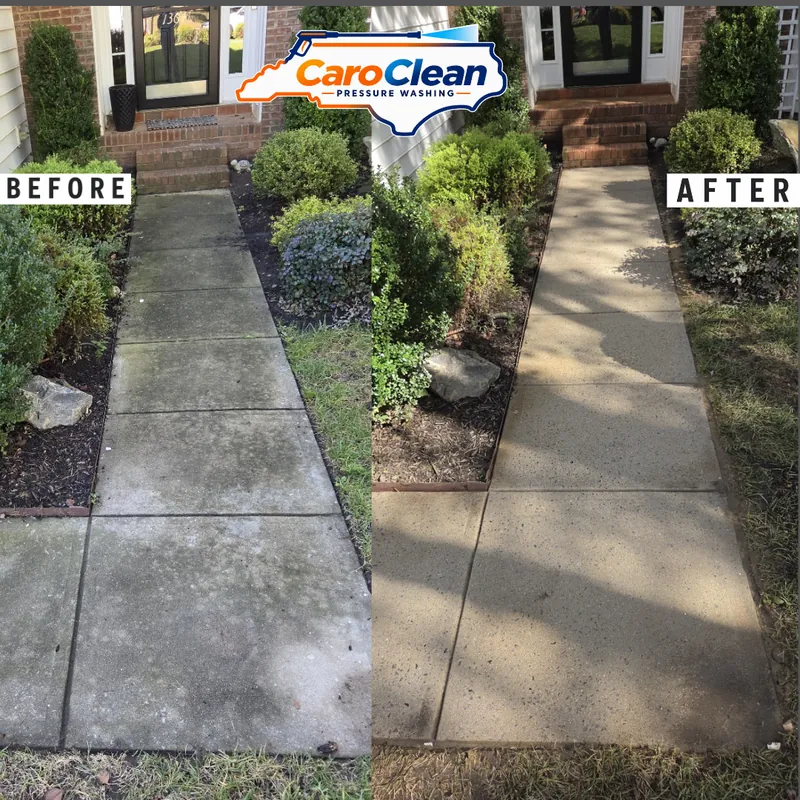
- Front walkways and steps, where slippery growth matters most
- Back patios that sit in the shade of the house
- Pool decks, which stay wet much of the summer
- Screened porch floors
- Sidewalks along the street, which HOAs notice too
All of it can be cleaned in the same visit for one flat price. See our driveway and concrete cleaning page for everything we clean.
What Not to Use on Concrete
- Acid based cleaners, which can etch the surface and leave it rough
- Wire brushes, which scratch and leave marks
- Mixing household cleaners together, which can give off dangerous fumes
- A pressure washer wand held close to the surface, which leaves stripes
Why the Joints Matter
The joints between concrete slabs collect dirt, leaves and weed seeds, and they stay damp long after the rest of the driveway dries. Left alone, they become a starting point for growth that spreads across the surface. That's why every driveway we clean starts with spraying out all the joints before the top gets surface cleaned.
Does Pressure Washing Damage Concrete?
It can when it's done with a wand held too close, which carves stripes and wears down the top of the concrete. A surface cleaner keeps the pressure steady and the distance even, so the whole driveway comes out clean with one even finish and no damage.
How to Keep Your Driveway Clean Longer
- Trim back branches that keep the driveway in heavy shade.
- Point downspouts and sprinklers away from the concrete.
- Blow off leaves, pine straw and pollen before they sit wet.
- Have the concrete cleaned about once a year, and sooner in shady spots or near the lake.
How Long Will a Clean Driveway Stay Clean?
For most homes, about a year. Our post treatment soaks into the concrete and helps hold off mold, mildew and other growth longer than a plain wash. Shaded driveways, concrete near the lake and areas under trees will still turn sooner than concrete in full sun.
If you're in an HOA neighborhood, a yearly cleaning is also the easiest way to stay ahead of letters. More on that in Can My HOA Fine Me for a Dirty House or Driveway?
Ready for a brighter driveway? Our driveway and concrete cleaning comes with one flat price, a fast, nearly instant quote and our 100% Satisfaction Guaranteed or it's FREE promise.