
Quick Answer
The sooner the better. A fresh red clay stain will often rinse out if you get to it before it dries, but once the clay settles into the pores of the concrete it takes a specialized red clay removal process to lift it, which is different from a regular cleaning. Stains that have sat for years may lighten instead of disappearing completely, so the earlier it's handled, the better it turns out.
Why Red Clay Stains Concrete So Easily
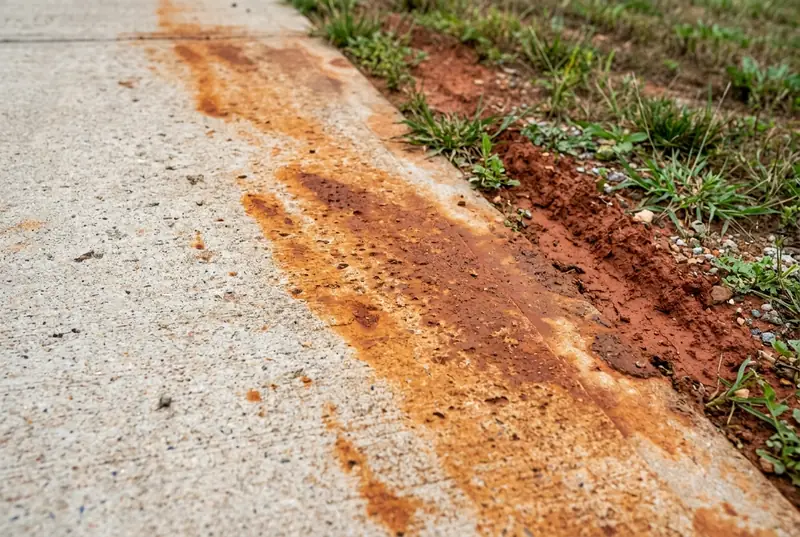
The red clay all over the North Carolina Piedmont gets its color from iron in the soil. The particles are fine enough to ride along with water right into the tiny pores of your concrete. When that water dries, the clay stays behind, and every rain that carries more clay onto the driveway makes the stain a little deeper.
Lighter concrete shows it worst. A brand new driveway is almost white, so even a thin film of clay stands out as an orange shadow along the edges, at the bottom of the slope or wherever water runs across it after a storm.
Where Red Clay Stains Come From
- New construction, where bare clay sits next to brand new driveways
- Landscaping and garden beds that wash over the concrete in heavy rain
- Yards that slope toward the driveway
- Downspouts that empty into beds right next to the concrete
- Tires, shoes and paws tracking clay up the driveway
It's especially common in newer neighborhoods around Huntersville and Mooresville, where landscaping is still filling in.
Why Pressure Washing Alone Won't Remove It
A lot of homeowners rent a pressure washer, blast the stain and end up with the same orange shadow, just with stripes running through it. High pressure is good at removing dirt and growth from the surface. Red clay isn't on the surface. It's down in the pores, and no amount of pressure alone will get it out.
What You Can Try Yourself
For a fresh stain, speed matters more than anything:
- Rinse the clay off with a garden hose before it has a chance to dry.
- Scrub with a stiff nylon brush and soapy water.
- Skip wire brushes, which can scratch the surface.
- Don't mix household cleaners together to make something stronger.
Blasting the stain with a pressure washer wand is the one thing to avoid. Held too close, it leaves stripes in the concrete and can wear down the surface, and it still won't pull out clay that has already soaked in. More on that in Why Is My Concrete Driveway Turning Black or Green?
When It's Time to Call a Pro
If the stain has dried in, covers a large area, or the driveway is starting to look blotchy and uneven, a professional cleaning will get you a better result than more scrubbing. The goal isn't just to lighten one spot. It's to make the whole driveway match again.
Why Red Clay Takes a Different Process
Red clay isn't like algae, mildew or moss. Organic growth comes off with a regular cleaning, because the cleaning solution breaks it down and the surface cleaner lifts it away. Red clay is a mineral stain sitting down inside the concrete, and a general cleaning won't pull it out.
Removing it takes its own process. The stain has to be treated, given time to dwell and worked out of the concrete by scrubbing, sometimes more than once on stubborn spots. It takes more time, more care and a different approach than a standard driveway cleaning, which is why we treat red clay removal as its own service.
What Results to Expect
Most red clay stains come out completely or lighten a lot. Stains that have been soaking in for years may lighten instead of disappearing completely, and we'll tell you honestly what to expect before we start.
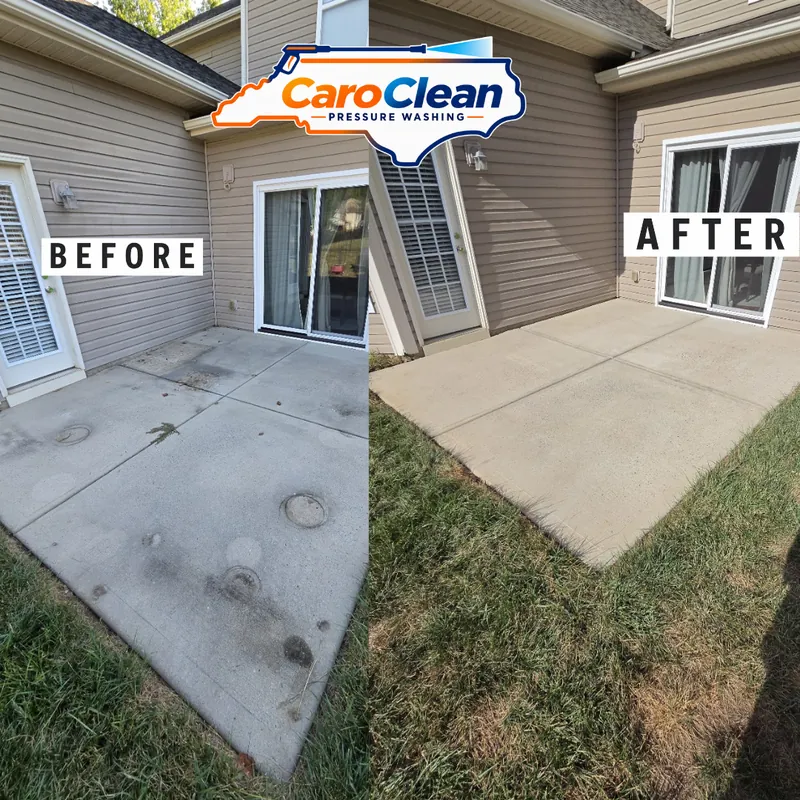
Once the stain is out, the rest of the driveway gets cleaned so everything matches, and you can add walkways, patios and the rest of your concrete in the same visit for one flat price.
Red Clay in Other Places Around Your Home
Driveways get the most attention, but red clay ends up everywhere:
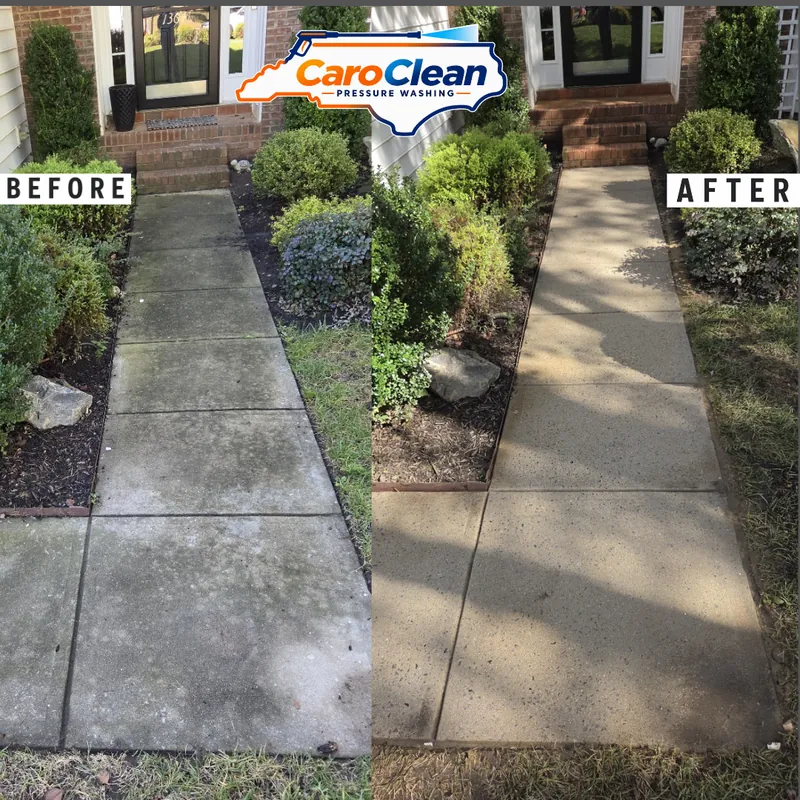
- Front walkways and steps next to garden beds
- Patios and pool decks near the yard
- Sidewalks along the street
- The bottom few feet of siding, where rain splashes clay up from the beds
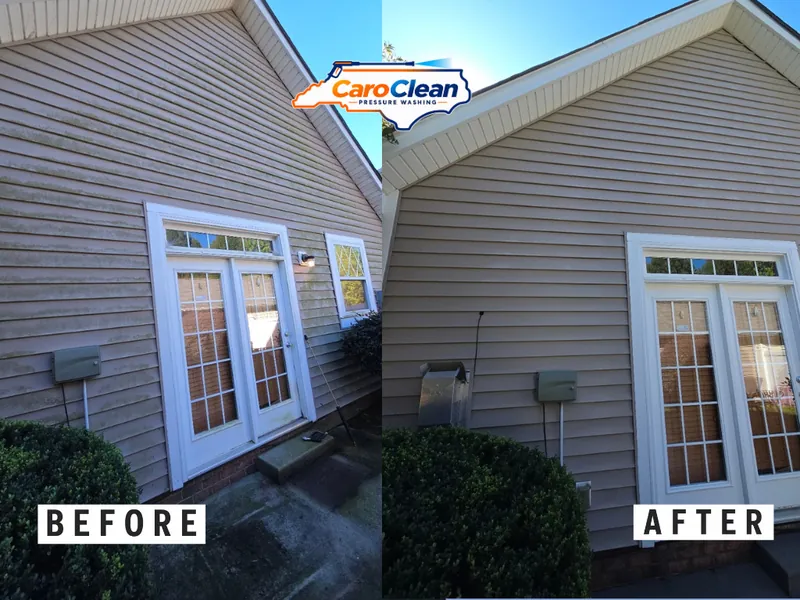
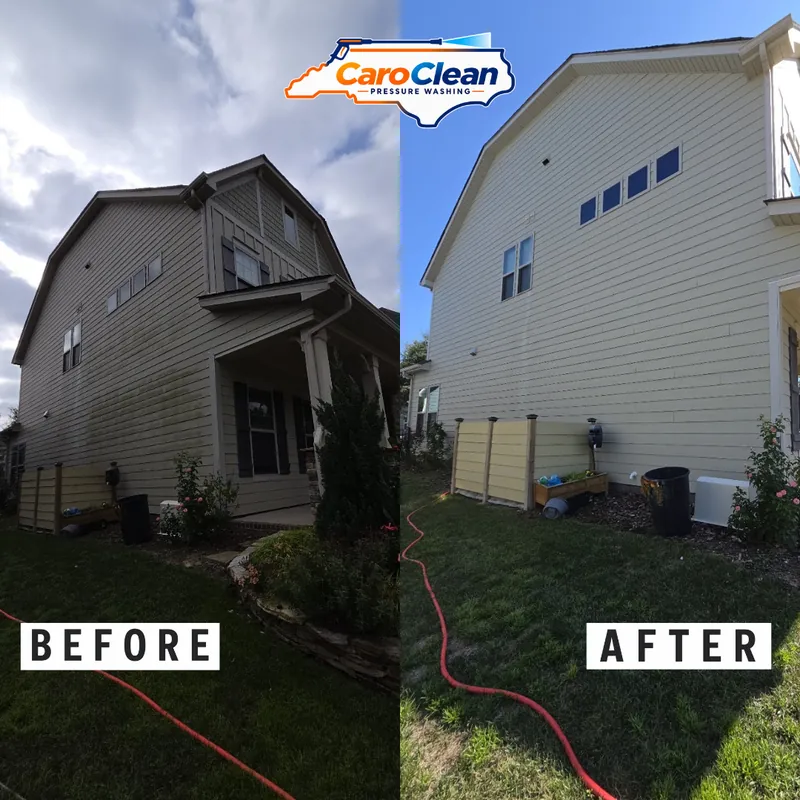
Light splash along the bottom of siding usually comes off during a house wash. Heavier staining on concrete takes the red clay process.
Is a Red Clay Stain Permanent?
Usually not, but time matters. A stain that's a few weeks old is much easier to remove than one that's been soaking in for years. If you've just finished landscaping, had a storm wash clay across the driveway or moved into a newly built home, the best time to deal with it is now.
Building a New Home? Plan for Red Clay
If you're in a newly built home, expect red clay for the first year or two. Bare lots, fresh landscaping and new irrigation all send clay onto brand new concrete. It's usually best to wait until the yard has filled in and nearby construction has wrapped up before getting red clay removed, so you're not cleaning the same stain twice. Until then, rinsing fresh clay before it dries keeps it from setting in.
Selling Your Home? Handle It Before the Photos
Orange stains on the driveway are one of the first things buyers notice when they pull up, and they show up clearly in listing photos. If you're getting ready to sell, have red clay removed and the rest of your concrete cleaned before the photographer comes out. A bright driveway makes the whole home look newer and better cared for.
It's also worth calling sooner rather than later if you've already tried scrubbing and the stain hasn't budged. Every week it sits gives the clay more time to settle deeper into the concrete.
How to Keep Red Clay Off Your Driveway
- Add edging or a border where beds drain onto the concrete.
- Point downspouts away from beds that sit next to the driveway.
- Rinse fresh clay off right away, before it dries.
- Get the driveway cleaned once landscaping or construction nearby is finished.
Red clay taking over your driveway? Our driveway and concrete cleaning comes with one flat price, a fast, nearly instant quote and our 100% Satisfaction Guaranteed or it's FREE promise.