
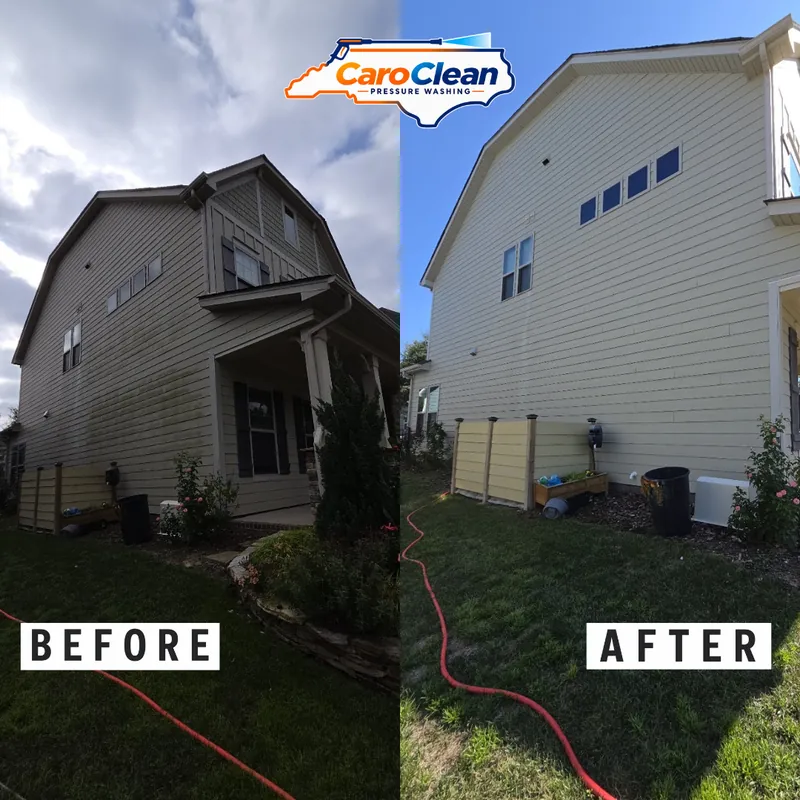
Quick Answer
You can, but it's easy to damage your siding the way most people try it: with a rented or store bought pressure washer pointed straight at the house. Too much pressure can crack or dent vinyl, push water behind the panels, strip paint and scar wood. And since pressure alone doesn't break down algae and mildew, the green usually comes back within months.
Why Pressure Washers and Siding Don't Mix
Pressure washers are made for hard, flat surfaces like concrete. Many of the machines people rent or buy put out 2,000 to 3,000 PSI or more, which is far more than most siding is built to take. Here's what can go wrong on each type.
Vinyl Siding
High pressure can crack, dent or loosen vinyl panels. Spraying upward drives water under the laps and behind the siding, where it can sit against the wall long after you're done.
Painted Wood and Hardie Board
Pressure can chip or strip paint and leave marks in the surface that show every time the sun hits the wall.
Cedar and Other Wood Siding
Wood is soft. Too much pressure fuzzes up the grain and can leave gouges that don't come out.
Brick, Stucco and Stone
They look tough, but older mortar and stucco can be worn down or chipped by high pressure.
Windows, Vents and Outlets
Window seals, screens, dryer vents, light fixtures and outdoor outlets are all easy to damage or flood with a strong stream of water.
The Problem Most People Don't Notice Until Later
Even when nothing gets damaged, blasting algae and mildew only takes off what's on the surface. The growth left in the texture of the siding grows right back, often within a few months. That's the biggest difference between a do it yourself pressure wash and a professional soft wash.
Not sure what that green film is in the first place? We explain it in What Is the Green Stuff Growing on the Side of My House?
What Professionals Do Instead
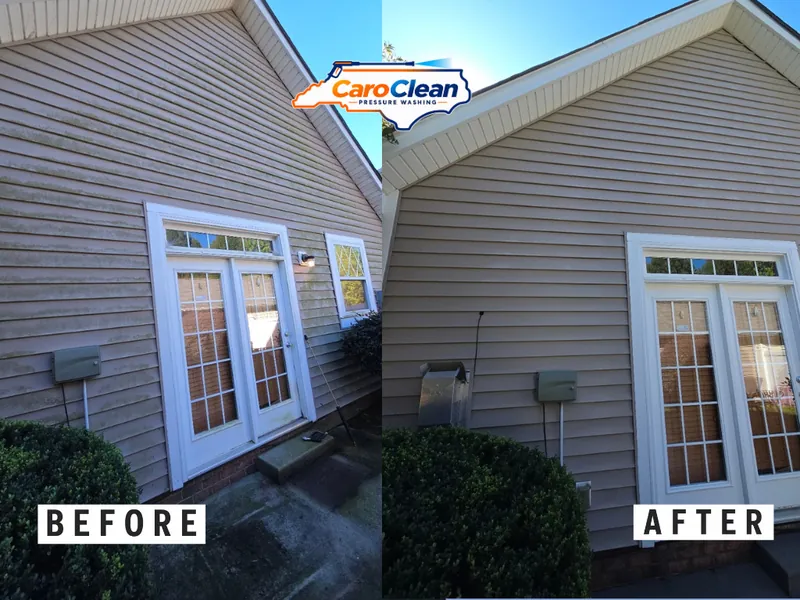
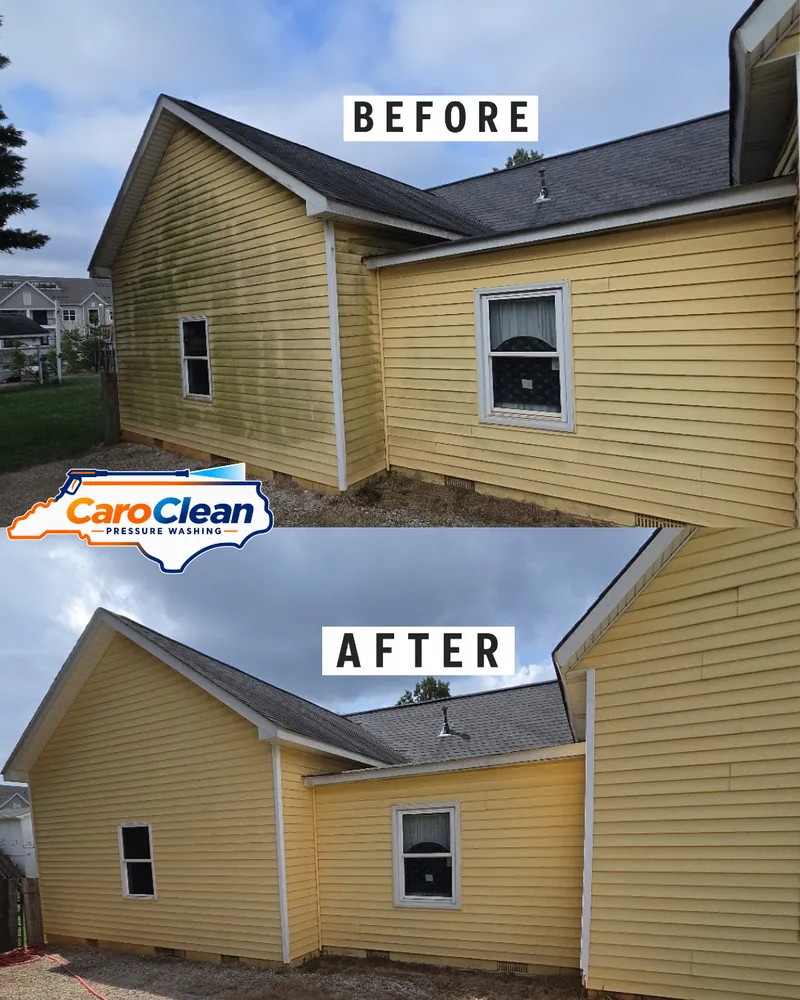
Siding gets a soft wash. A cleaning solution does the work of breaking down algae, mildew and grime, then the house is rinsed with gentle, controlled pressure, so there's no stripped paint and no water forced behind the panels.
The solution and pressure are matched to your siding, whether it's vinyl, brick, stucco, stone, cedar or Hardie board. Your plants and landscaping get soaked with a neutralizer before any solution goes on, so they're protected the whole time.
Rinsing is just as important as washing. The house gets rinsed from the top down with gentle pressure, so nothing is left streaking down the walls and nothing gets forced under the laps of the siding.
If You Still Want to Do It Yourself
If you decide to take it on yourself, these habits will keep you out of the most common trouble:
- Use the widest tip and the lowest pressure that still cleans.
- Start well back from the siding and move in slowly.
- Spray down or straight on, never upward under the laps.
- Keep the spray away from windows, vents, light fixtures and outdoor outlets.
- Cover or protect plants and garden beds near the house.
- Never run a pressure washer from a ladder.
Be careful with yourself, too. A pressure washer stream is strong enough to cause serious injuries, so keep it away from skin and never point it at people or pets.
Signs Your Siding Was Damaged by a Pressure Washer
If your house has been pressure washed before, by you or by someone else, these are the signs that the pressure was too high:
- Cracked, dented or wavy vinyl panels
- Panels that have come loose or rattle in the wind
- Lines or stripes in the siding where the wand passed over it
- Paint missing in patches or peeling around trim
- Wood that looks fuzzy, splintered or gouged
- Water stains or a musty smell inside, near exterior walls or windows
If you notice any of these, it's worth having someone take a closer look before the next wash.
What It Really Takes to Do It Yourself
Washing a house yourself is more than an afternoon with a machine. Between picking up the rental, buying a cleaning solution, moving hoses and ladders, covering plants and outlets, and working your way around every wall, most people spend a full day or more. Two story homes add ladder work, which is where a lot of injuries happen.
Then there's the cleanup and the question of whether it worked. If the growth wasn't broken down, the shady side of the house will often start to turn green again within a few months.
Questions to Ask Before You Hire Someone
Not every company cleans siding the same way. Before you book, ask:
- Do you soft wash siding, or pressure wash it?
- How do you protect plants and landscaping?
- Are you insured?
- Is the price a flat price, or by the hour?
- What happens if I'm not happy with the results?
Clear answers to all five are a good sign. For us, the answers are a soft wash, a neutralizer on every plant, insured and fully registered, one flat price, and our 100% Satisfaction Guaranteed or it's FREE promise.
How We Protect Your Home During a Wash
A clean house is only half the job. The other half is making sure nothing gets hurt along the way. On every house wash, outdoor outlets get taped, electrical gets covered, and your plants, shrubs and garden beds get soaked with a neutralizer before any solution goes on. The pressure stays gentle on siding, trim and windows, and lakefront homes get extra care with runoff.
Doing It Yourself vs Hiring a Pro
Doing it yourself means renting or buying a machine, figuring out the right cleaning solution, spending a long day on your feet, and taking the risk of a repair bill if something goes wrong. If the growth isn't broken down, you'll likely be doing it again next season.
Hiring a pro means one flat price up front and a house that stays clean longer. Every house wash we do is backed by our 100% Satisfaction Guaranteed or it's FREE promise, and you only pay once you're 110% happy with our work.
Rather skip the rental and the risk? Our house washing service gets your siding clean with one flat price and a fast, nearly instant quote.