
Quick Answer
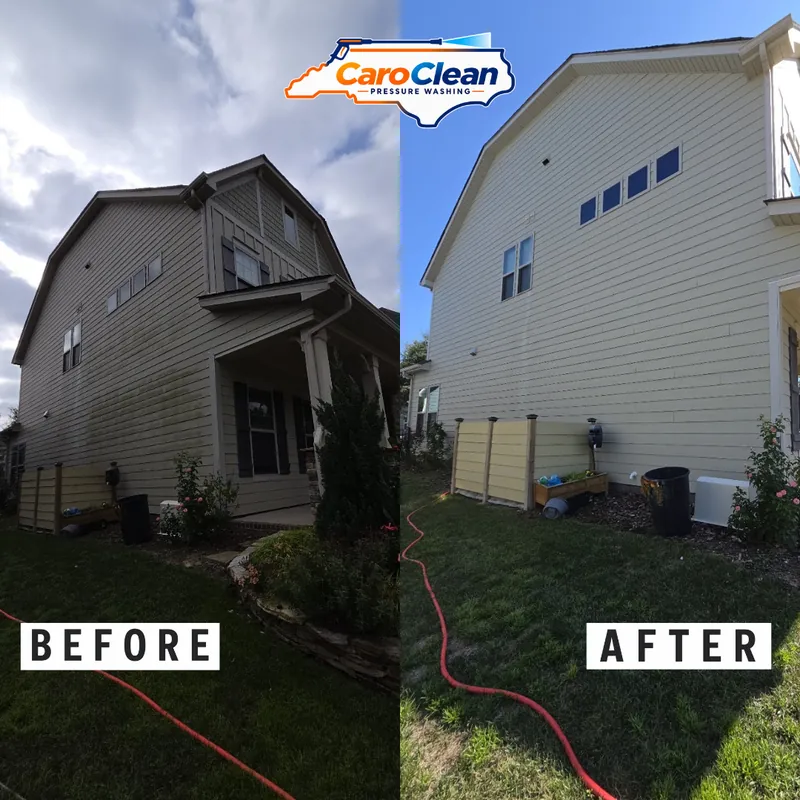
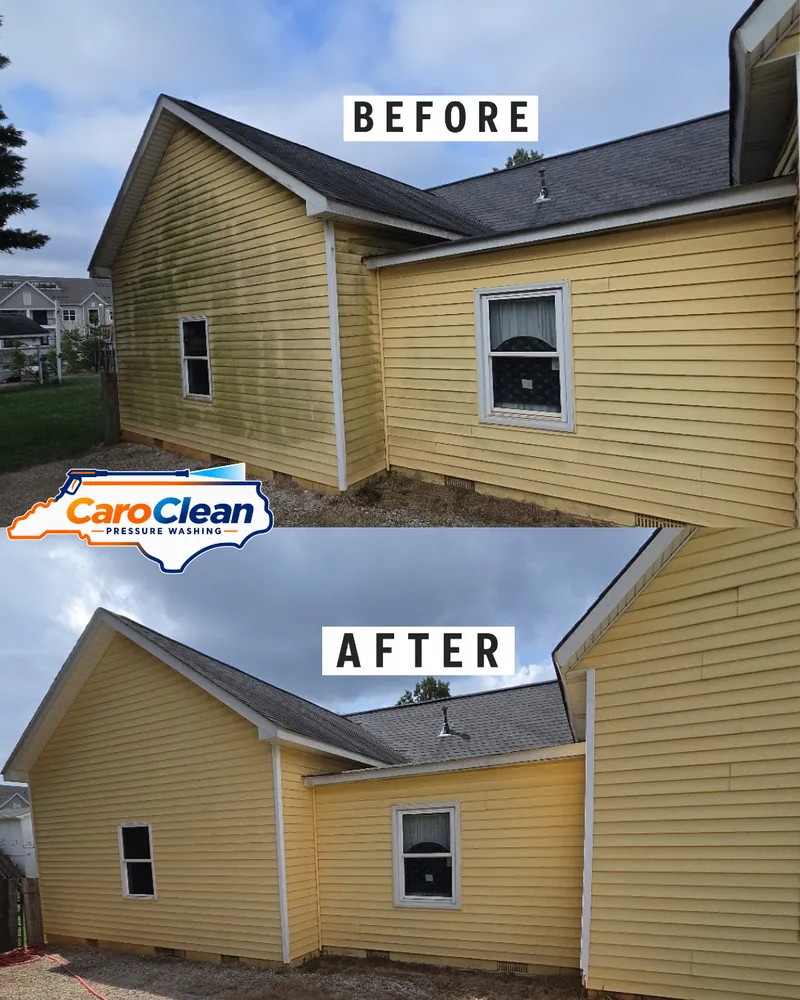
That green film is almost always algae. It's a living organism that grows on siding wherever moisture, shade and a thin layer of dirt or pollen give it something to hold onto. It isn't a paint problem or a permanent stain. Around Lake Norman, humid air off the water helps it spread faster, which is why it usually shows up on the shady side of the house first.
What That Green Film Actually Is
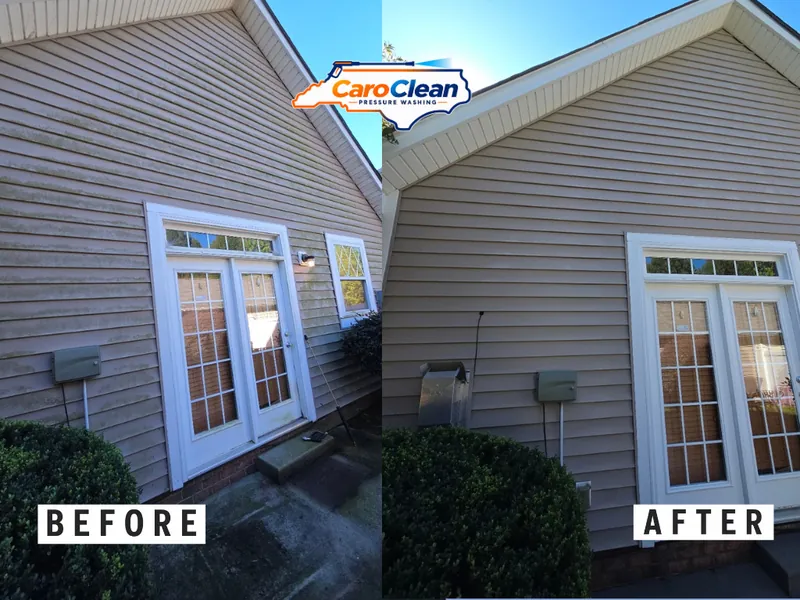
Most of the green you see on vinyl, Hardie board and painted siding is algae. Algae doesn't need soil to grow. It needs moisture, a little light and a thin layer of dirt, pollen or other organic matter to cling to, and the outside of your house gives it all three.
It often grows right alongside mildew, which looks gray or black. In heavy shade you may also find moss or lichen, usually low on brick, stone or the foundation. They're all organic growth living on the outside of your home, and they all come back if they're only knocked off the surface.
Algae, Mildew, Moss or Lichen?
- A green film or powder that smears when you rub it is usually algae.
- Gray or black spots and streaks are usually mildew.
- Soft, fuzzy green clumps, most often low on brick or stone, are moss.
- Flat, crusty patches that grip the surface tightly are lichen.
Why It Shows Up on One Side of the House First
If one wall is greener than the rest, it's almost always the wall that gets the least direct sun. Here in North Carolina that's usually the north side, plus any wall shaded by trees, a neighbor's house or a deck overhead. Shaded siding stays damp for hours after rain and morning dew, and damp siding is exactly what algae wants.
A few other things make it grow faster:
- Sprinklers that hit the siding every morning
- Shrubs and bushes planted tight against the house, which trap moisture
- Gutters that overflow and run down the same spot every time it rains
- Walls that face the lake, where humid air settles against the house
Why It's So Common Around Lake Norman
Long humid summers, mild winters and a heavy spring pollen season make the Charlotte region a great place for algae to grow. Homes near the water deal with even more moisture in the air. Every spring a coat of pine pollen settles on siding and gives growth more to feed on, and the mature trees in neighborhoods around Davidson and Cornelius add shade on top of it.

Is It Bad for My House?
At first it's mostly a looks problem. Left alone for a few years, though, algae and mildew hold moisture against your siding, spread into seams and trim, and can leave stains behind. On painted wood and trim, growth that stays put for years wears the paint down faster.
A green house is also one of the most common reasons homeowners get a letter from their HOA. If that's already happened to you, read Can My HOA Fine Me for a Dirty House or Driveway?
It's also a sign of where moisture sits on your home. If one wall turns green every year, that's a wall that stays damp, and it's worth checking that sprinklers, gutters and nearby shrubs aren't keeping it wet.
Why Blasting It Off Doesn't Last
Blasting the green off with high pressure removes what you can see, but it leaves growth behind in the texture of the siding, so it comes right back. High pressure also brings its own risks to vinyl, paint and wood, which we cover in Can I Pressure Wash My Own House?
That's why siding gets a soft wash. A cleaning solution goes on and breaks down the algae and mildew, then the house is rinsed with gentle, controlled pressure. Because the growth is actually broken down instead of just knocked loose, the house stays clean much longer. Before any solution goes on, your plants and landscaping get soaked with a neutralizer so they're protected the whole time.
Does It Only Grow on Siding?
No. The same growth shows up anywhere around your home that stays shaded and damp. Once you start looking for it, you'll usually find it in more than one place:
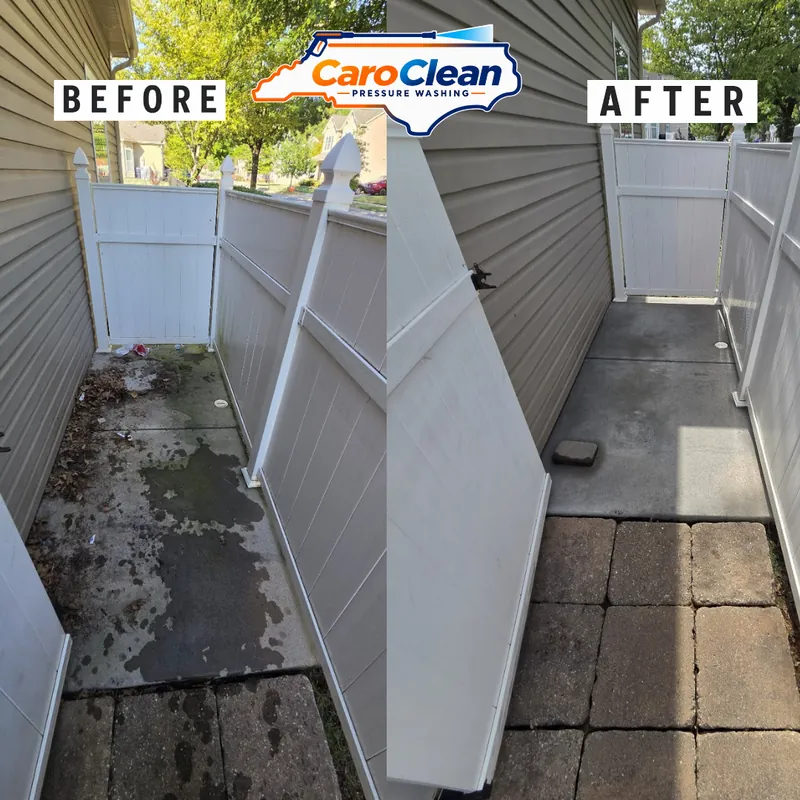
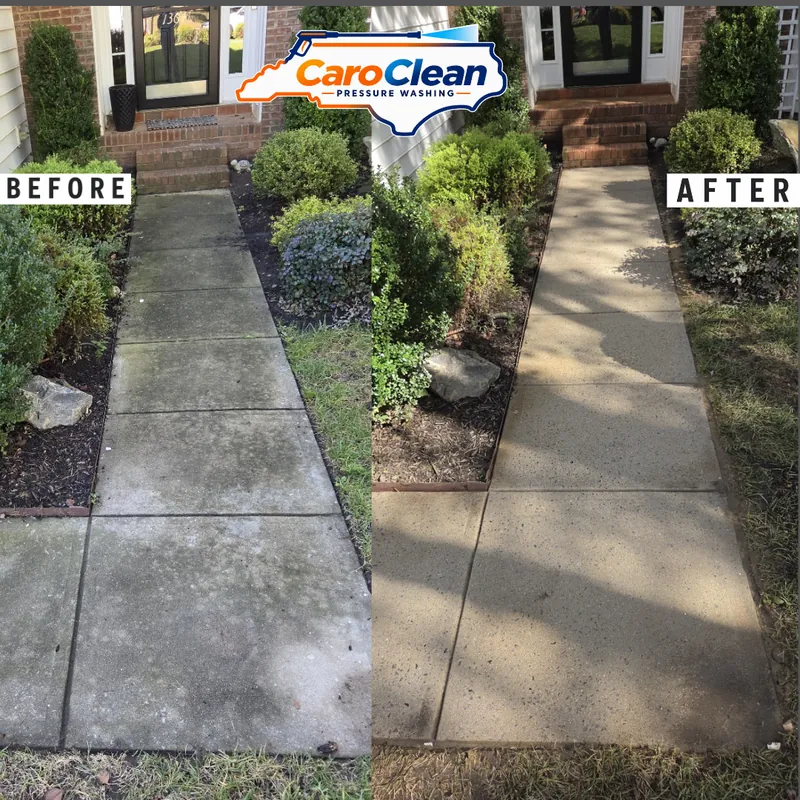
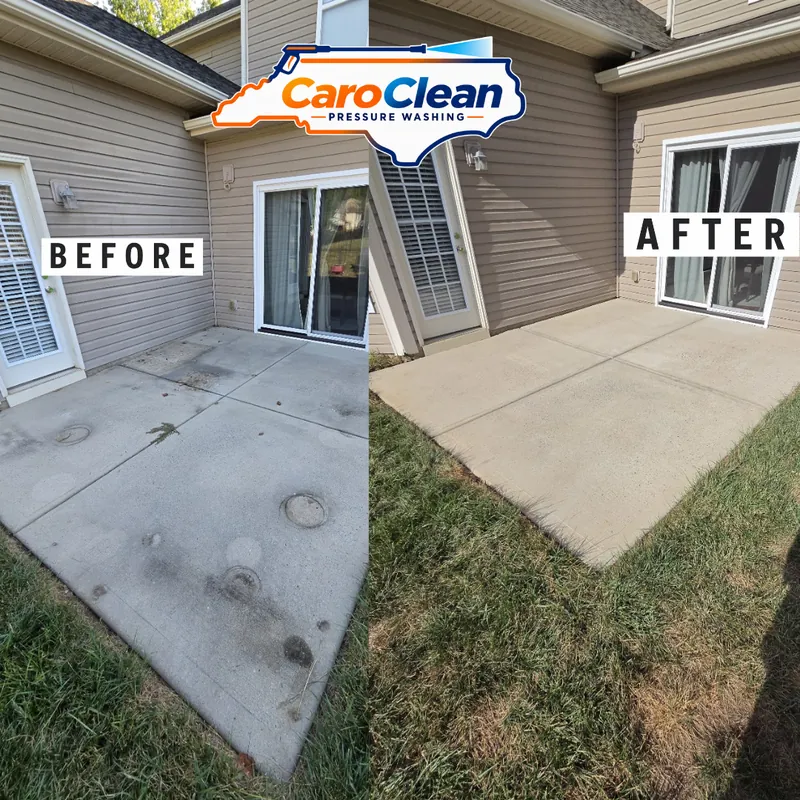
- Driveways, walkways and patios, especially in shade or near downspouts
- The bottom rails of vinyl fences and the shady side of wood fences
- Deck boards, railings and stairs
- Brick steps, stone walls and the foundation
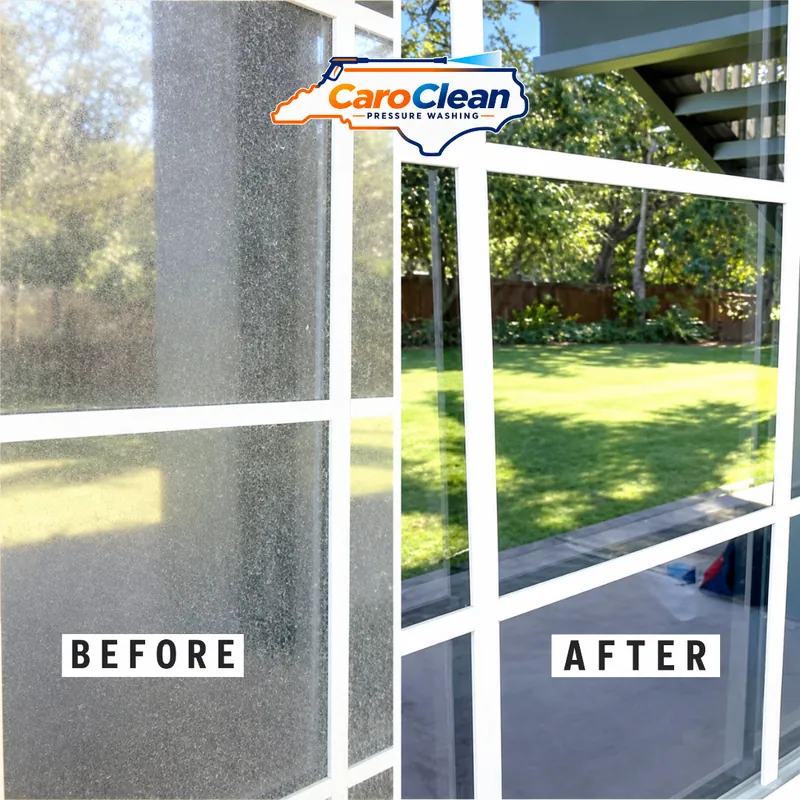
- Window frames, shutters and trim
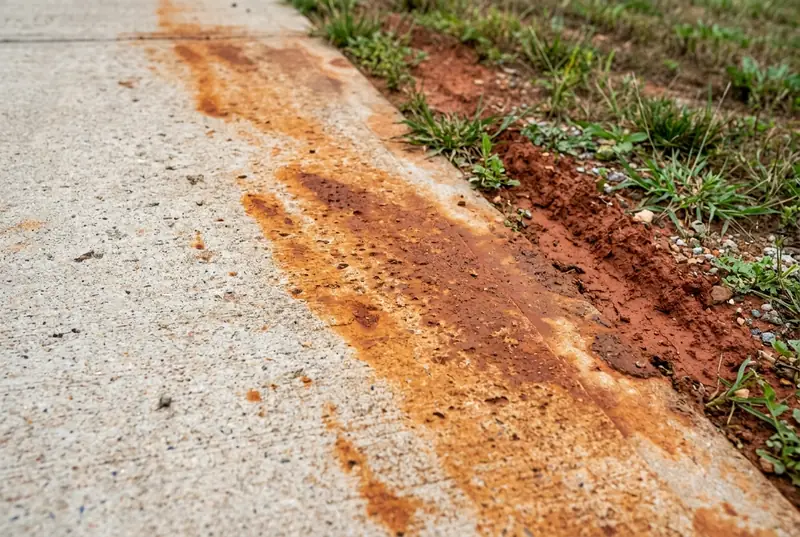
On concrete it often turns dark green or black instead of bright green. We explain why in Why Is My Concrete Driveway Turning Black or Green?
Can I Just Spray It With Bleach?
It's tempting, and plenty of people try it. The trouble is that strong household products can burn grass, shrubs and flowers, leave streaks on siding and fade painted trim if they're mixed or applied wrong. Never mix cleaning products together to make something stronger, since some combinations give off dangerous fumes.
Getting a house clean without harming anything around it takes the right solution for the surface, the right amount of time on the wall and plants that are protected before anything goes on. That's the whole idea behind a professional soft wash.
How Long Does a Clean House Stay Clean?
For most homes around Lake Norman, a soft wash keeps siding looking clean for about a year. Walls with heavy shade, homes right on the water and homes surrounded by trees can start to show green again sooner. Sunny walls on an open lot often go longer.
The best way to know is to look at your north side every spring. If you can see a green or gray tint from the driveway, it's time. Our guide on how often you should wash your house near Lake Norman breaks it down by type of home.
How to Keep It From Coming Back
- Trim shrubs and branches back from the siding so sun and air can reach it.
- Point sprinklers away from the house.
- Keep gutters clear so rain doesn't spill down the same wall.
- Wash the house about once a year, and sooner on shaded walls and lakefront homes.
Wondering when to schedule it? See What Time of Year Is Best to Pressure Wash a House in North Carolina?
Seeing green on your siding? Our house washing service takes care of it with one flat price, a fast, nearly instant quote and our 100% Satisfaction Guaranteed or it's FREE promise.